
For almost 30 years, GEO has been asking: How can philanthropy help nonprofits and communities thrive because of philanthropy rather than despite it?
We’ve gathered and learned with and from grantmakers committed to strengthening relationships with communities, learning for improvement, providing more reliable and flexible funding, collaborating for greater impact and strengthening organizations for the long term. The Measuring Love Cohort builds on that long history, offering grantmakers practical tools and a supportive peer community to explore how love and power can strengthen philanthropic practice in service of nonprofits and communities.
Over the years, the GEO community has shown a commitment to getting better at practicing philanthropy this way. The language of “love” may feel new, but the practices of care, deep relationships, sustained support and willingness to see from a different perspective will feel familiar to many in the GEO community.
In this conversation, Audrey Jordan, PhD, of the Measuring Love team and Akilah Massey, GEO’s vice president of programs, discuss how the Measuring Love Cohort explores what it means to practice love in philanthropy — and how that practice can tangibly inform our strategies and how we move resources in service of nonprofits and communities.
Akilah: Coming from the GEO 2026 National Conference in Boston last month, we heard grantmakers having more conversations about equity, trust-based philanthropy, community-driven philanthropy and supporting movement work than we did even a decade ago. Yet, it seems that many of the underlying habits of our sector have not changed to keep pace with our rhetoric.
Audrey: I think we always have to start these conversations with power. In a “power over” framing, the approach to philanthropy centers on charity. In the Measuring Love framework, we are working with people to unpack that approach so we can move into approaches intended to strengthen and share power.
Often, when you look at theories of change, the outcomes funders are looking at are more about the change that happens for people because of the programs philanthropy identifies as the appropriate fixes. I think of this as a charity mindset because too often it looks like: I will do what I think is best for you in a way that is least disruptive or inconvenient for me.
What would happen if we made the organizations, institutions and systems that produce inequity in the first place the targets of our change?
I saw this mindset pop up even at GEO’s recent National Conference.
In one session, a young woman spoke about taking over the work of a domestic workers’ organization her mother had founded. She shared with vulnerability the path her work had taken, how it affected her family and what she needed from funders to continue that work. Many of the questions she received, however, ignored the depth of her story and the incredible resilience and strength she and domestic workers demonstrated. Instead, they focused on evidence and proof that her programmatic approach worked.
The questions reflected a charity mindset: asking the person closest to the problem to prove herself rather than examining the systems that created the need.
Another personal example comes from a funder I worked with who started with very ambitious goals to eliminate a large systemic social problem in a historically disinvested neighborhood. They hired me and others — mostly people of color — to move to the city and develop the initiative, engaging residents as partners.
We more than successfully engaged many residents, not only as participants but as leaders of the broader engagement work. But within a year, the funder had shut down the program because they were dissatisfied with our progress on “moving the needle” on poverty.
The residents were much less surprised than our staff by this decision — they’d seen this behavior so many times before — and they helped us identify resources so they could continue their community-building work.
These aren’t simply examples of bad funding practices or bad funders, but something much deeper. Many professions teach us to detach from emotion so we can be more “objective,” even though there is no such thing as true objectivity or neutrality in a world as politicized as the one we live in.
We are professionalized into detachment, and then we come to relationships and our philanthropy in this detached state. Through the work of the Measuring Love Cohort and framework, we will learn and experience habits of attachment and building genuine relationships with ourselves and others.
Akilah: The second story makes me wonder: What could have happened if that funder had been better able to access their heartbreak or disappointment? Would having the space and comfort to display that kind of vulnerability have changed the outcome? That feels like a completely different orientation.
Audrey: If the funder had been able to say to us: “I did this for these reasons and now I feel like I made the wrong decision because…,” at least that would have been something real to negotiate — something we could have discussed and better addressed as partners.
We may not have all understood or agreed with the thought process, but it would have given us an opportunity to be in authentic conversation together. We could have said, “This work is going to take time. What do you need? What are you disappointed about? Get in here with us so we can figure out a mutually beneficial response.”
Instead, they stood outside the community, outside of our organizational table, making decisions as if they were moving pieces around on a game board. That is exactly what it felt like: a project, a demonstration project, an experiment, a game.
Akilah: So you’re also calling for a different orientation to success and time. Because if I’m approaching this as charity, I can decide I’m going to fund something for a year, or two years or even five years, and then determine whether it “worked.”
But if I’m approaching it as partnership, I’m entering into something deeper but also different. I’m acknowledging that I don’t know exactly how long it’s going to take, but that I’m in it alongside you, whatever that has to mean.
Audrey: Yes, it requires a different relationship to uncertainty.
People with power often want certainty before they’ll act. They want to know the return on investment. They want to know exactly what’s going to happen. They want guarantees.
But love doesn’t work that way.
Love says, “I’m committed to you even when I don’t know exactly how this is going to unfold.”
That’s why I think this work is spiritual work as much as strategic work. If we don’t transform who we are, then we’ll keep reproducing the same systems with different language.
Akilah: People will talk about equity, justice and trust. But too often underneath, they’re still operating from fear, trying to control outcomes and protect themselves. Love requires vulnerability, and vulnerability is something philanthropic institutions don’t practice well.
Audrey: When we approach philanthropy this way, we can enter the work expecting that it will take time, that harm must be repaired, and that we will need to roll up our sleeves as learners and co-investors with skin in the game.
To me, love plus power is about being invested with people, not experimenting on them.
That is why the Measuring Love framework includes tools for generative conflict resolution, difficult conversations, and power and feelings.
We need these practices that help us address harms, and that help us understand where rage is coming from; why it is being directed at one another; and how to unpack vulnerability together so we can focus on agreement, consensus, shared success and healing rather than hurting each other by repeating the same dehumanizing patterns.
Akilah: It’s funny because a lot of philanthropy is described as taking risks. But maybe what it means sometimes is taking financial risks — not reputational risks.
Audrey: Exactly. Many funders are comfortable risking money. They’re much less comfortable risking themselves or saying, “I was wrong” or “I don’t know.”
Our dominant culture teaches mastery, control, winning and certainty. Love teaches interdependence, humility, curiosity and listening.
That’s why I don’t think this is simply a technical challenge. It’s a human transformation challenge.
Akilah: Is this also why so much of the content and the framework itself begins with what many of us would call “self-work” and unlearning those dominant habits — not just intellectually, but in how we move through the world?
Audrey: Yes! It starts with decolonization of your mind, your heart and your spirit.
So many of us are walking around unaware that the oppression out there is also inside of us. Dominant culture often dictates what we do, how we act, how we think about success and what we understand to have meaning.
A transformative practice has to involve unlearning the dominant themes that make us accomplices to this inequitable system and elevating the parts of ourselves that have been buried or have become inaccessible to us.
From there, the path forward is transforming our mindsets, feelings and behaviors, and reclaiming our authentic selves — our authentic thoughts, feelings and behaviors.
In philanthropy, that brings us back to relinquishing that idea that we have all the answers to seeing other people’s worth and value; recognizing the power we hold to elevate others; shifting and sharing power with people who have fewer resources; respecting that we’re often in people’s metaphorical “homes” as guests; following community leadership; and making sure that leadership is confident, competent, resourced and resourceful.
Akilah: It all feels like a way of knitting our heart, brain and spirit back together so that our racial equity work can become deeper, more real. Can you tell us more about what practicing love actually looks like in a foundation context?
Audrey: A practical example of the shift this allows becomes clear when we look at foundation boards.
Most foundations have two clients: the community and the board.
Executive leadership is often deferential to the board and charitable toward the community.
But what if their relationship with the board was focused on helping board members deepen their understanding of community members’ lived experiences — and more importantly, how they need to become instruments of love and power for change?
What if philanthropy showed the same deference to community that it shows to boards? A lot would change.
This is just one of the ways we can prepare ourselves to come into places with a mindset that says:
“I do not really know you, your contributions, your strengths or your interests, but I believe there is a lot I can learn that will help me be a better partner to you. First, I have to respect and believe that you have gifts, talents and contributions that I can see, believe in and appreciate. That you want to and can be successful – and I want you to be.”
This is also why I say love is a discipline.
People hear the word “love” and think it’s soft, but I think it’s probably the hardest thing we can practice.
It asks us to confront ourselves and notice where we’re protecting our ego, our status or our comfort. It asks us to notice how we may be the biggest obstacle to experiencing that beloved community the Rev. Dr. King spoke about because of our detachment from others. That’s difficult work but I don’t think there’s another path if we’re serious about transformation.
If these questions resonate with you, the Measuring Love Cohort offers an opportunity to explore them alongside peers and apply the framework to your own philanthropic practice.
From October 2026 through May 2027, GEO’s Measuring Love Cohort will bring philanthropic practitioners together to explore these ideas in community and apply the Measuring Love framework to their own philanthropic practice. Learn more about the cohort and apply by Monday, August 10 at 12:00 pm ET.
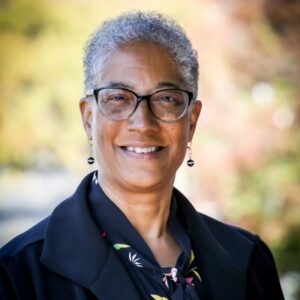
Audrey Jordan, PhD brings decades of experience in community engagement and participatory evaluation, all centered in equity and collective liberation.
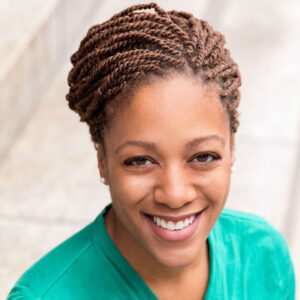
Akilah Massey is an experienced program designer with almost two decades of experience developing programs to shift philanthropic practice.