
Why worker well-being belongs at the center of every philanthropic strategy
In 2017, Pui Ling Tam was an executive director of a youth development nonprofit in San Francisco earning an $80,000 salary. Raising her own salary felt indulgent; dollars were better spent elsewhere. Eventually, she saw this logic had consequences that she hadn’t traced all the way through.
Two of her most promising staff, a BIPOC woman and a gender-expansive person she believed could one day lead the organization, might be considered for promotions without meaningful raises. They were previous participants in the organization’s programs who came back as employees and embodied exactly what the mission promised. And the sector to which they committed their professional lives was preparing to underpay them for it.
“I was not only wronging those staff, but our mission,” Pui Ling said. “We were funneling our youth into a trap: mission-driven, values-aligned work that would not pay their bills and allow financial autonomy in adulthood.”
Pui Ling is now a Relationship Manager at the Walter & Elise Haas Fund (W&EHF), carrying that reckoning with her. It has contributed to shaping W&EHF’s views on what philanthropy is asking of the people on the frontlines.
The Problem Hiding in Plain Sight
What Pui Ling named — the price of ignoring nonprofit worker well-being — is not abstract. These negative effects show up in: leadership transitions that destabilize organizations, the exodus of experienced staff from organizations they believe in but whose conditions they cannot sustain, and in the gap between what a grantee reports and what an executive director might confide to close associates over coffee.
According to a Center for Effective Philanthropy report, 95% of nonprofit leaders expressed some level of concern about burnout, and 34% said that staff burnout was “very much” a concern. To better understand what’s driving these conditions, W&EHF and the James Irvine Foundation supported Nonprofit Finance Fund’s Heart of the Sector research which drew from interviews with nearly 50 nonprofit, foundation, and government leaders, survey responses from 500 California nonprofits, and analysis of 70 data sources. What they found confirmed that this is not a failure that can be isolated to management; it is structural.
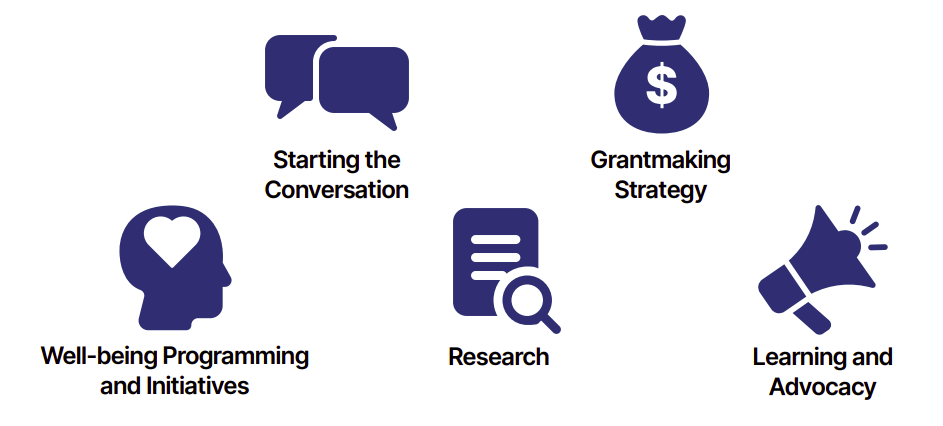
The nonprofit sector employs nearly 800,000 workers in the Bay Area. In San Francisco, 75% of nonprofit workers are people of color, and low-wage workers are disproportionately Black or African American. They are the workforce through which philanthropic strategy becomes real, yet nonprofit employment too often fails to provide a path to economic mobility and may even undermine it.
The sector has long had vocabulary for this: burnout, compassion fatigue, vicarious trauma. Today, philanthropy has the opportunity to demonstrate more presence and share the responsibility for these conditions.
Funders Hold a Key Piece of the Solution
It’s tempting to frame worker well-being as something nonprofits should handle better internally. Pui Ling’s story makes clear why that framing rings false. She wasn’t failing as a leader; she was operating in a system that equated underpaying staff with fiscal responsibility. Funders uphold much of that system. When funders support programs but not people, we force organizations to cannibalize their own capacity. Pursuing impact without asking about its cost on people is to make Pui Ling’s former rationale — raising her salary wasn’t a priority — sensible, even virtuous.
Philanthropy alone doesn’t cause burnout, but it is part of the system producing it. W&EHF knows this intimately because we had to reckon with our own participation in it. For years, W&EHF distributed annual grants to roughly 400 nonprofits, averaging $30,000 each — one-year cycles, recurring applications, and consuming reporting requirements. It wasn’t until we held our grantmaking up against a clarifying question that the picture shifted: what would it look like to fund our partners like we wanted them to win?
What We’ve Been Trying
W&EHF now offers leader well-being grants, giving grantee organizations resources to invest in well-being as they define it, which may include rest, professional support, team development, or healing.
Our most significant structural commitment has been standardizing substantive, long-term, unrestricted funds, modeled by the Endeavor Fund: seven-year general operating grants of $500,000 annually, totaling $3.5 million each to seven organizations. We were transparent with prospective grantees that we cared about two things: how they are closing the racial and gender wealth gap, and how they are supporting nonprofit worker well-being.
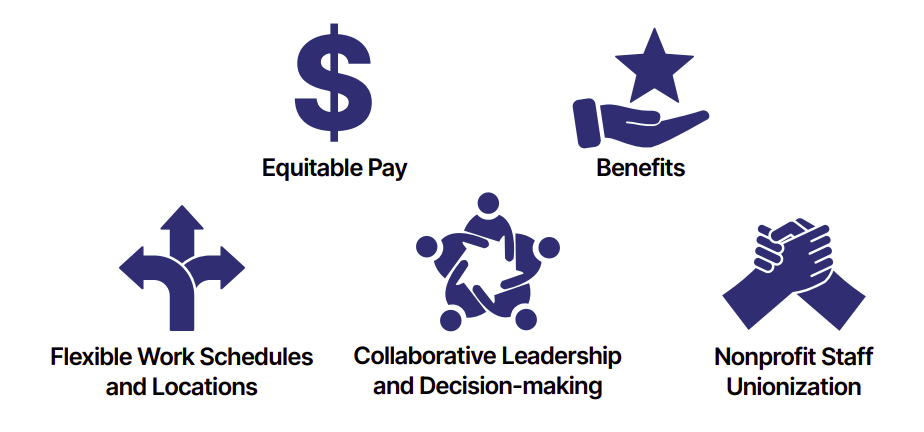
We don’t prescribe what that should look like. We make space for organizations to show us, whether that means salaries, benefits, wellness activities, pathways to leadership, unionization, or flexible work locations or schedules. Today, in every grant application we ask prospective grantees if they are committed to worker well-being, being explicit that we care about their workers, not just their programs.
Trust As A Precursor To Well-being
What we didn’t anticipate was how long it would take to earn the right to that conversation. In year one, grantees wondered quietly, What’s the catch? What do you really want? Will you take this grant away? This wasn’t unreasonable. It reflected expectations of classic funder-grantee relationships. With consistency, however, the tone shifted by year three with one grantee saying: “We really appreciate that you haven’t wavered from day one, which has allowed us to trust you. You kept your word.”
That shift wasn’t due to grant design. It was our behavior inside the relationship that made it possible for grantees to be candid about how well-being is perceived and what it requires. While funders are accustomed to setting the terms, W&EHF staff let grantee partners define what well-being meant in their context. As one grantee said: “This is my first time seeing a funder that cares about us, cares about nonprofit worker well-being, trust-based philanthropy, and moving our work forward.”
Bright Spots
Three years into the Endeavor Fund, every grantee organization has raised their lowest wages, expanded benefits, and iterated on organizational culture. Youth Organize! California implemented a shared leadership model in which all staff joined one of two internal decision-making teams and received a $5,000 raise to reflect their expanded responsibilities. Well-being, in their hands, means something more than benefits — it means self-determination.
Some grantees have also used the stability of the Endeavor Fund as leverage, negotiating better terms with other funders: general operating support where they’d previously received project grants, multi-year commitments where single-year grants had been the norm. One grant has begun to change the conditions of others.
The Heart of the Sector research offers broader evidence worth sitting with. Canal Alliance, a Marin County nonprofit serving Latino immigrants, piloted a four-day workweek in 2024 and made it permanent within four months: 87% of staff reported improved work-life balance, turnover dropped by 50%, zero resignations from burnout, and applications for open positions increased by 70%. When organizations have room and resources to invest in their people, the returns are clear and tangible.
A Burgeoning Movement
This work isn’t happening alone:
- Fund the People, All Due Respect, and ReWork the Bay have also been leading this conversation with workers at the forefront
- Independent Sector and National Council of Nonprofits have added research and national grants
- In March 2026, Walter & Elise Haas Fund, James Irvine Foundation, and Nonprofit Finance Fund hosted Thriving Nonprofits, Thriving Communities: Investing in a Healthy Workforce in Oakland, bringing about 100 nonprofit leaders and funders together to act on the research findings.
- Geraldine Alcid, executive director of Filipino Advocates for Justice and a panelist at the Thriving Nonprofits convening, put it plainly: “Wellness is power-building work.” It’s a reframe that stops treating worker well-being as a support function and recognizes it as mission-critical.
W&EHF is proud to be part of this growing field effort.
Well-being Is The Work
Pui Ling came to this work from the inside of the problem. That personal perspective, understanding the costs of this work, matters. The thread from her reckoning as an executive director to the W&EHF’s evolving practice is not a metaphor, it is a through-line.
As Jamie Allison, executive director of the Walter & Elise Haas Fund, said: “Nonprofit worker well-being is not a luxury — it’s infrastructure. It is as essential as our databases, evaluation systems, payroll, and technology.”
The nonprofit workers that power our sector are central, not incidental, to the positive change we seek to bolster. Irrespective of philanthropic focus area, the success of the nonprofit sector depends on the well-being of the people who show up daily to do the work.
An Invitation
We leave this reflection with questions we’re still sitting with and that we hope to explore further in conversation with peers:
- What resources and practices can nonprofit leaders access now, given the conditions they are facing?
- How do we address and right-size workload amid employee burnout and persistent community need?
- What would it look like for funders to show up as genuine partners in worker well-being?
If you want to go deeper, join us on Tuesday, May 12 from 2:00 – 3:00 PM ET for a Community Call hosted with GEO: Beyond Burnout: What Funders Must Know and Do to Support Worker Well-being and Drive Mission Success.
We’ll draw on findings from Nonprofit Finance Fund’s Heart of the Sector research and what we’ve learned inside the Endeavor Fund. Program officers, foundation executives, and board members are especially welcome. Register here.

Anthem Salgado is the Strategist for Communications at the Walter & Elise Haas Fund, leading storytelling and amplification of the Fund’s work to foster community well-being.

Pui Ling Tam is a Relationship Manager at the Walter & Elise Haas Fund, where she is responsible for community engagement, grantmaking, research, accountability, and learning in the Fund’s Economic Well-being strategy.