
As we enter a new year in a time widely recognized as unprecedented, a question sits at the forefront for many: How can foundation funders support their nonprofit partners best in this moment?
Since last January, the current administration has targeted nonprofits and foundations with an onslaught of attacks on federal funding sources; work centered on diversity, equity, and inclusion (DEI); and the issues and communities they serve. Nearly 90% of foundation leaders reported an increase in demand for funding from nonprofit grantees in 2025, according to new Center for Effective Philanthropy (CEP) data, with 30 percent increasing their payout rate more than planned as a result. Nonprofits face an existential threat, with over 60 percent stating that the current context poses moderate to significant risk for them to continue to operate.
Today, CEP released A Sector in Crisis: How U.S. Nonprofits and Foundations Are Responding to Threats, which provides timely data collected from a nationally representative group of over 400 nonprofit leaders and nearly 230 foundation leaders in August and September 2025. This CEP report and the 2025 National Study of Philanthropic Practice from Grantmakers for Effective Organizations (GEO), drawing from 765 staffed foundations across the U.S., both begin to address this question. Below are three key considerations from each for foundation funders to best support nonprofits during this time.
Support capacity building.
CEP’s research found that half of nonprofit leaders indicated a desire for foundations to assist them in building skills, cultivating relationships, gaining knowledge, and acquiring resources that will enable them to best respond to the current context. However, only about 40 percent of foundation leaders share this belief in capacity-building support as the best help to provide. According to GEO’s study, with 35 percent of grantmakers reporting investments in staff wellness and burnout prevention between 2022 and 2024, and nearly one in five supporting security, safety, and legal or risk-management needs, the data point to a shift in how funders are responding to current conditions by broadening capacity-building support to address the human, operational, and political pressures nonprofits face.
With more than 80 percent of nonprofit leaders responding to CEP’s survey experiencing or anticipating an increased demand for services, and over half experiencing or anticipating a reduction in staffing, it’s clear that nonprofits’ need for comprehensive capacity-building support has never been greater.
Listen to your nonprofit grantees’ needs.
The importance of both foundations and nonprofits learning and collecting feedback from those they serve is well documented in several previous studies and in CEP research released last year. One of the areas where listening to feedback has resulted in significant gains in the sector has been around multiyear funding and general operating support.
Nonprofits have long called for an increase in multiyear and flexible funding. And it’s clear that foundations are starting to answer the call. CEP’s recent survey found that more than 40 percent of foundation leaders reported increasing unrestricted giving in 2025 due to the current context, and just under 30 percent increased multiyear grants. These findings were corroborated by GEO’s study, which found that 87 percent of grantmakers provide multiyear funding – an increase from 79 percent in 2014 and 2017 – and 77 percent offer at least some general operating support.
However, even with these gains, there is still plenty of room for foundations to grow when it comes to listening to nonprofits.
In 2025, only 53 percent of nonprofit leaders rated foundations as effective at understanding grantee challenges and at communication, versus over 90 percent and 80 percent of foundation leaders respectively. This staggering misalignment underscores just how critical it is for foundations to listen to and consider their nonprofit grantees’ needs, especially in the current moment.
GEO’s 2025 publication, Community-Driven Philanthropy: Participation, Partnership and Power, and CEP’s 2025 report, Voices That Matter: How Nonprofits and Foundations Engage With the Communities They Support, explore how listening to nonprofits and communities can — and should — shape philanthropic practice, strategy, and power. Listen to Community is a new resource and engagement hub for funders ready to listen, respond, and shift power to impacted communities.
Finally, be willing to take risks.
The current context has hit nonprofits hard. Nonprofit leaders report an increased strain on their organizations and missions, with over 40 percent experiencing backlash or opposition, 61 percent experiencing or anticipating pressure to reframe public descriptions of their work, and more than half experiencing or anticipating legal challenges related to their issue area or community.
Yet, even with this clear need for bold action, CEP’s research found a significant disparity between how foundation leaders and nonprofit leaders rated foundations’ willingness to take risks. While nearly 70 percent of foundation leaders perceived their foundations as willing to do so, only 29 percent of nonprofit leaders shared this perception.
As one foundation leader shared with CEP, “I believe that courage is contagious. When we use our voice to stand up for our beliefs and values, we help inspire others to do the same.” As a nonprofit leader shared in GEO’s study, “When funders listen and allow those of us on the ground to respond to what our community needs most, that’s when real change happens.”
Both CEP’s and GEO’s studies highlight nonprofits’ need for foundations to fund all aspects of their work, respond to their needs and make the big bets that the current context necessitates. By standing in their values and showing up for their grantees, foundations will be able to effectively support nonprofits in navigating these challenging times and achieving transformational change.
To learn more about CEP’s and GEO’s studies, join the upcoming webinars Equity Proves Effective on February 10 and A Sector in Crisis on February 19.

As Vice President of Programs at Grantmakers for Effective Organizations, Akilah Massey designs programming and facilitates connections that help grantmakers transform their practices through peer learning and community-driven approaches. She brings two decades of experience supporting philanthropic organizations in building more effective and justice-oriented grantmaking strategies.
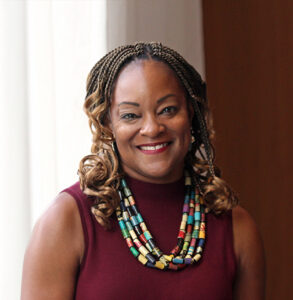
Elisha Smith Arrillaga, Ph.D., manages CEP’s Research team, leading the creation, development, analysis, and release of various research projects and initiatives relevant to the philanthropic sector’s most pressing issues.